
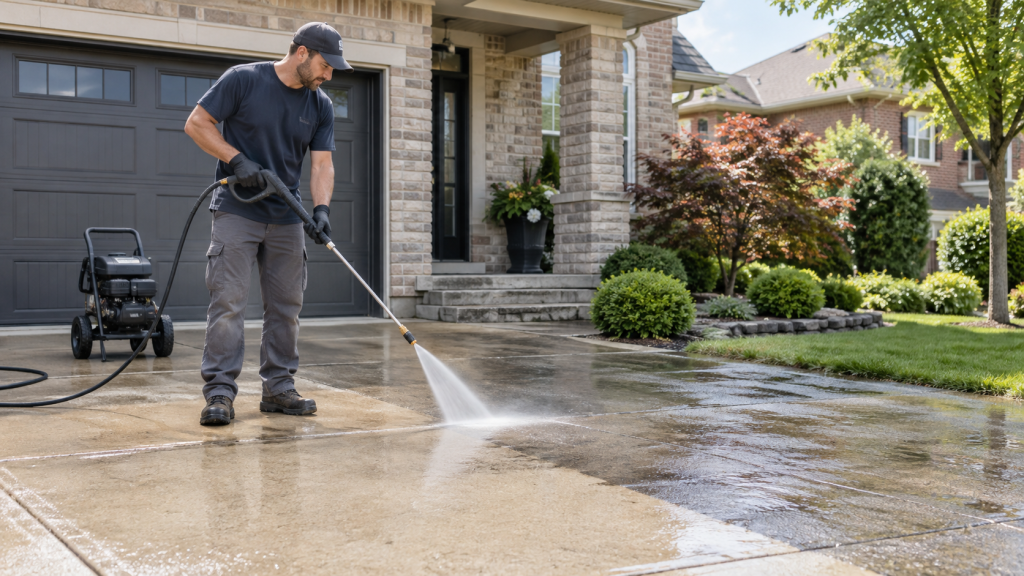
Pressure Washing in Toronto & GTA
Pressure washing can help remove dirt, grime, algae, organic buildup and some surface staining from suitable exterior hard surfaces. In Toronto and the GTA, SIR Renovation Group provides pressure washing and exterior cleaning for appropriate driveways, concrete, interlock, patios, walkways and similar areas. The surface condition is reviewed before work so the cleaning approach and scope can be confirmed safely.
Pressure washing is not right for every material or stain. Delicate, damaged or unstable surfaces may need lower-pressure cleaning, another method or a separate assessment. The goal is a cleaner, better-presented exterior without treating unsuitable surfaces indiscriminately.
What is pressure washing?
Pressure washing uses specialized equipment to deliver water that helps loosen and remove buildup from appropriate exterior surfaces. It is a cleaning method, not a promise that every mark or discoloration will disappear.
Some stains may be embedded, permanent or linked to an underlying issue. Surface age, finish, condition, drainage, nearby building components and the type of buildup all matter when the work is reviewed.
Why do property owners use pressure washing?
Property owners commonly request pressure washing to:
- Remove visible dirt and grime from suitable hard surfaces.
- Address algae or organic buildup in appropriate areas.
- Improve the appearance of driveways, patios, walkways and entry areas.
- Prepare an exterior for seasonal use or general property maintenance.
- Refresh hard surfaces before a home is listed or prepared for a new tenant.
- Maintain selected areas around a residential or small commercial property.
Cleaning may improve appearance without restoring a worn, cracked, faded or permanently stained surface.
Surfaces that may be suitable
Driveways and concrete
Stable driveways and concrete areas may be candidates for pressure washing. Dirt, grime, organic buildup and some surface staining may be reduced or removed.
Cracks, spalling, loose sections, surface deterioration and older repairs should be identified before cleaning. Damaged concrete may require a different approach or a separate repair assessment.
Interlock and pavers
Interlock and pavers can sometimes be cleaned when their condition, joint material and installation allow it. Cleaning may address surface dirt, grime and organic buildup, but aggressive cleaning can disturb joint material or reveal existing movement and damage.
Re-sanding, sealing, resetting and repairs are not automatically included. These items should be confirmed and priced separately when required.
Patios
Patios made from suitable hard exterior materials may benefit from cleaning before the outdoor season or after organic buildup develops. The material, finish, age and condition should be reviewed first.
Loose pieces, failing joints, surface damage and delicate finishes may require another cleaning approach or separate assessment.
Walkways and exterior hard surfaces
Stable walkways, steps, entry areas and similar exterior hard surfaces may be suitable for cleaning. Planning should account for nearby doors, windows, landscaping, outdoor fixtures and drainage paths.
Different surfaces on the same property may require different approaches.
Common buildup pressure washing may address
Pressure washing may help remove or reduce:
- Dirt and general outdoor debris.
- Grime from foot traffic or vehicle use.
- Algae on suitable exterior hard surfaces.
- Organic residue from leaves, plants or shaded areas.
- Some surface staining when the material can be cleaned safely.
Oil, rust, paint, efflorescence, deep discoloration, biological growth within porous materials and stains caused by drainage problems may need a different treatment or further review.
What customers should prepare before service
Before requesting an estimate, identify the areas to be reviewed and describe the buildup or concerns. Where practical, customers should:
- Move vehicles, planters, outdoor furniture, toys, mats and other loose items away from the work area.
- Keep doors and windows closed during cleaning and identify areas needing special protection.
- Point out cracks, loose sections, previous repairs, delicate finishes and drainage concerns.
- Identify outdoor electrical items, lighting, decorations, irrigation components and other nearby fixtures.
- Make sure the work area can be accessed safely.
- Share property rules, tenant considerations or access instructions.
- Provide photos when requesting an estimate if the condition cannot be described easily.
Moving items, protecting sensitive objects, repairing damage and restoring disturbed joint material are not included unless they are confirmed in the scope.
General service process
1. Review the request
The requested areas, surface types, buildup and access conditions are reviewed. Photos or an on-site review may be useful when the initial description is not enough.
2. Confirm the approach
The material and condition are considered before deciding whether pressure washing is appropriate. Lower-pressure cleaning, another method or a separate assessment may be recommended where needed.
3. Confirm the scope and estimate
The areas, access requirements and any additional work are clarified before scheduling. Pricing depends on the confirmed scope and property conditions.
4. Prepare the work area
Movable items and nearby sensitive areas are addressed before cleaning begins. Customers should follow any preparation instructions for the property.
5. Complete the agreed cleaning
The work is performed using an approach suited to the confirmed surface and scope. Unsafe, unsuitable or materially different conditions may require discussion before proceeding.
6. Identify separate needs
Repairs, sealing, re-sanding, stain treatment, paint removal, drainage work or other services outside the cleaning scope can be identified for separate review.
Safety considerations
Pressure washing involves water, equipment, spray, wet surfaces and runoff. Customers should:
- Keep children, pets and other people away from the active work area.
- Expect surfaces to be wet and potentially slippery during and after cleaning.
- Identify fragile items, outdoor fixtures, electrical components and nearby openings.
- Consider where water and loosened debris will flow.
- Keep spray away from people, animals, occupied openings and sensitive components.
- Report unstable surfaces, loose materials, known leaks and other property concerns.
- Use caution around steps, slopes, edges and areas where water may collect.
A request may need to be changed, declined or separately assessed if the property condition creates an unreasonable risk of damage or injury.
When pressure washing may not be appropriate
Pressure washing may not be suitable for:
- Fragile, deteriorated, loose or unstable surfaces.
- Surfaces with significant cracking, spalling, failing joints or missing material.
- Delicate finishes or materials that can be damaged by water or spray.
- Areas where water intrusion could affect the building or interior spaces.
- Situations where runoff could affect landscaping, neighbouring property or drainage.
- Roofing, siding, wood, painted surfaces or other materials requiring a different method or specific review.
- Stains or growth that need treatment beyond surface cleaning.
The same material can respond differently depending on its age, finish, installation and condition. A property review is important when the suitability of the method is uncertain.
When lower pressure, another method or separate pricing may be needed
A lower-pressure approach or another method may be better for delicate, aged, painted, coated or porous surfaces, or for areas close to vulnerable building components. A separate review may also be needed for repairs, restoration, sealing, joint material, paint removal, oil or rust treatment, drainage, water entry or extensive staining.
Pressure washing does not automatically include:
- Repairs to cracks, spalling, loose sections or damaged joints.
- Interlock resetting or re-sanding.
- Sealing or coating application.
- Paint removal or preparation for repainting.
- Specialized oil, rust or biological stain treatment.
- Roof, siding, wood or fragile-surface cleaning.
- Landscaping, drainage or water-intrusion corrections.
These items may require separate pricing or a different service, depending on the property and requested outcome.
Seasonal considerations for Toronto & GTA
Toronto and GTA properties experience changing weather, freezing conditions, snow, ice, shade and seasonal organic buildup. Spring cleaning may reveal residue left by winter. Summer work may prepare patios, walkways and outdoor areas for use. Fall service may form part of broader property maintenance, subject to weather and surface conditions.
Cold temperatures, freezing water, snow, ice and heavy rain can affect safety, scheduling and the suitability of exterior cleaning. Exterior work should be reviewed for current conditions rather than assumed to be appropriate in every season.
Landlords and property managers may need to coordinate access, tenant communication and safe use of shared walkways. Small commercial properties should consider entrances, customer access, operating hours and runoff before work is planned.
How to request an estimate
Tell SIR Renovation Group which surfaces you want reviewed, where the property is located in Toronto or the GTA, what buildup you have noticed and whether there are access or condition concerns. Photos can help clarify the request. The final scope is confirmed based on the property and requested work.
Frequently Asked Questions
What is pressure washing used for?
Pressure washing helps clean suitable exterior hard surfaces by removing or reducing dirt, grime, algae, organic buildup and some surface staining. It is not appropriate for every surface or condition.
Can pressure washing clean a driveway?
Stable concrete and driveway surfaces may be suitable. Cracks, spalling, loose sections and older repairs should be identified before service.
Can interlock be pressure washed?
Interlock may be cleaned when its condition, joints and installation allow it. Re-sanding, resetting, sealing and repairs are not automatically included and may need separate pricing.
Can pressure washing remove every stain?
No. Oil, rust, paint, efflorescence and some biological or deep discoloration may require another treatment or separate review.
Is pressure washing safe for all exterior surfaces?
No. Roofing, siding, wood, painted surfaces, fragile finishes and deteriorated materials should not be treated indiscriminately. The method depends on the material and condition.
Should customers move patio furniture and vehicles?
Yes. Move loose items away from the work area where practical and identify anything requiring special protection. Preparation requirements vary by property.
Can pressure washing be done in winter?
Weather and surface conditions affect whether exterior cleaning is suitable. Freezing temperatures, snow, ice and heavy rain can affect safety, scheduling and results.
Does pressure washing include repairs or sealing?
Not automatically. Repairs, re-sanding, resetting, sealing, paint removal, specialized stain treatment and drainage corrections may require separate pricing.
Do you provide pressure washing in Toronto and the GTA?
Yes. SIR Renovation Group offers pressure washing and exterior cleaning for suitable surfaces in Toronto and the GTA, subject to the surface condition and confirmed scope of work. Contact SIR Renovation Group to request an estimate.
How do I request an estimate?
Describe the property, surfaces, buildup and access conditions using the contact details below.
Need Help With This Service?
Contact SIR Renovation Group to discuss your project and request an estimate.
Primary Phone
Secondary Phone